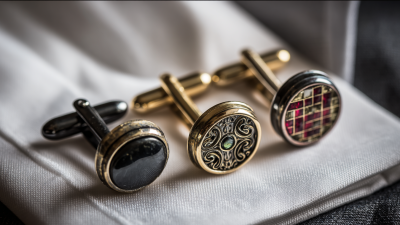
Engraved Cufflinks give wholesale buyers a compact product with clear gifting and personalization appeal. The opportunity sits within a much larger jewelry market, not a cufflink-specific category. Grand View Research valued the global jewelry market at approximately USD 353.26 billion in 2023 and projected a 4.7% compound annual growth rate from 2024 to 2030. That figure offers useful context, but it should not be mistaken for a forecast of cufflink sales.
For 2026 planning, broad market growth is only one signal. The McKinsey and Business of Fashion report, The State of Fashion 2025, projected global fashion sales growth of 2 to 4 percent in 2025, reflecting a cautious environment. Wholesale decisions therefore need to balance design appeal with practical details: engraving legibility, metal finish, clasp reliability, packaging, and repeatable production quality. A small initial order can reveal more than a polished sample. Check how initials look on a real cuff, under ordinary indoor light.
Useful choices include classic monograms, discreet dates, and simple corporate marks. Buyers should request production samples and confirm engraving dimensions before approving bulk runs. Ask about material specifications, lead times, minimum quantities, and quality checks. These details affect both customer satisfaction and reorder potential.
There is a caveat. Personalization can distinguish a product, but it can also slow fulfillment or complicate inventory. Not every buyer needs extensive options. Sometimes, fewer choices work better. This outline focuses on sourcing considerations, design selection, and supplier evaluation, while treating market reports as context rather than guarantees.
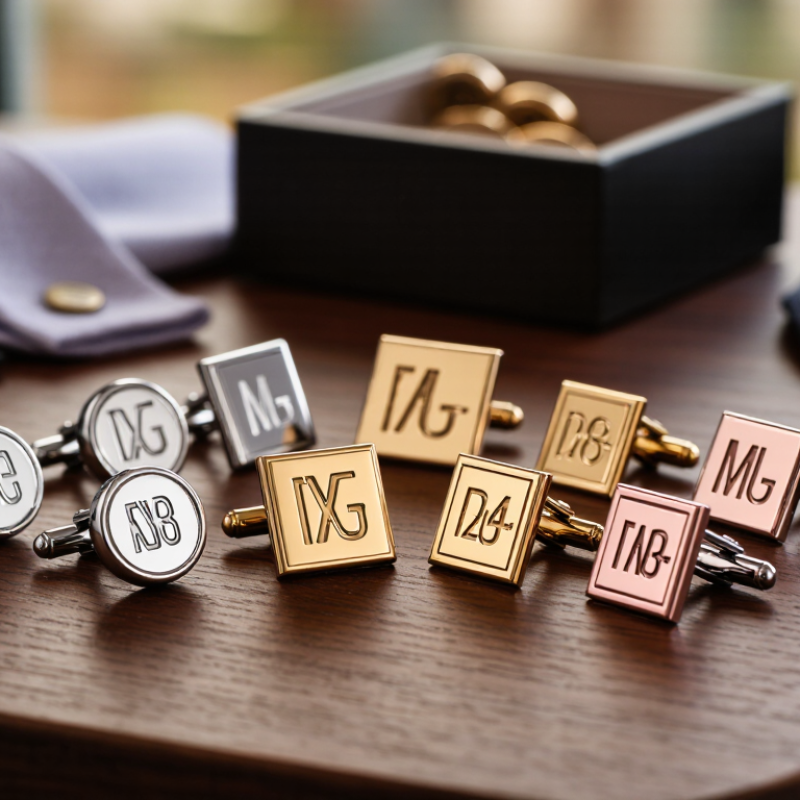
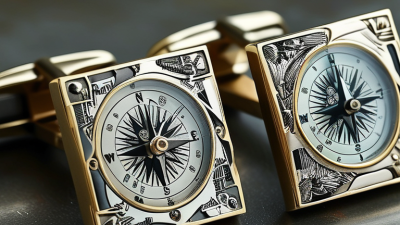
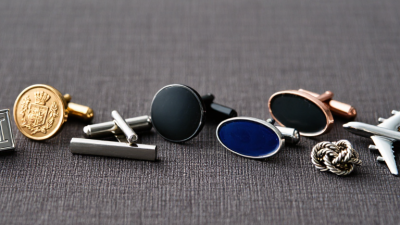
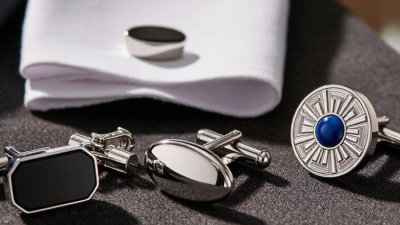
Engraved cufflinks are paired shirt accessories marked with initials, dates, symbols, or short text. The design is usually etched or cut into a small metal face, such as a round, square, or oval plate. A polished surface catches light; a brushed finish feels quieter. Small details matter.
Wholesale buyers use them for company gifts, wedding parties, alumni events, and coordinated staff accessories. A buyer might order initials for a formal event or a simple emblem for a uniform program. Names and dates can make gifts personal, but long text may become hard to read on a small face. Requesting a sample before production helps confirm letter size and placement.
For bulk orders, check engraving clarity, fastening movement, finish consistency, and packaging. Compare a production sample with the approved artwork, not just a digital mock-up. Even careful specifications can leave room for interpretation.
One batch may look slightly different under bright lighting, so buyers should decide what variation they can accept. Deep engraving may improve visibility, yet it can change the surface feel. A practical order balances readable detail with repeatable production.
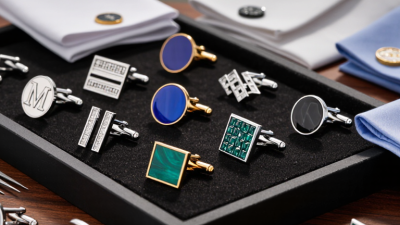
Wholesale cufflink assortments should reflect how customers dress, gift, and maintain their accessories. For corporate markets, slim stainless-steel or brushed silver-tone designs pair well with dark suits and are easier to position at accessible price points. Add discreet initials or a short date, but keep engraving legible at arm’s length. Small details matter. A mirror finish looks refined, yet fingerprints show quickly; buyers should request physical samples before approving bulk production.
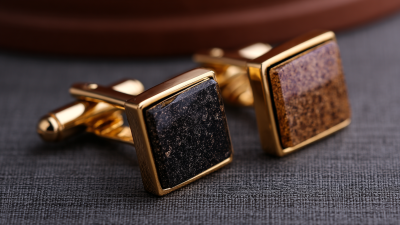
For wedding and premium gift channels, sterling silver, gold-tone finishes, and restrained enamel offer more visual warmth. The Silver Institute’s World Silver Survey 2024 reported global silver jewelry fabrication of 203.1 million ounces in 2023, down 13% year over year. That figure covers jewelry broadly, not cufflinks, so it signals material context rather than direct cufflink demand. The World Gold Council reported 2,093 tonnes of global gold jewelry consumption in 2023. Precious-metal styles can suit higher-value gifting, while plated options offer a lower-cost appearance; specify the base metal and coating clearly.
Market fit is not just a question of price. Minimal geometric shapes often work for office wear, while engraved crests or colored details may suit ceremonial gifting. Avoid offering too many finishes in one order: buyers can end up with slow-moving stock. A sensible sample review checks engraving depth, clasp movement, edge smoothness, and how the finish looks under indoor lighting. One caveat: preferences vary by region, and a popular wedding style in one market may feel too formal elsewhere.
Material hardness and market fit: Mohs hardness is an approximate scratch-resistance indicator, not a measure of overall cufflink durability.
Approximate Mohs ranges: sterling silver 2.5–3, gold alloys 2.5–4, brass 3–4, stainless steel 5–6, and titanium about 6. Gold and silver suit luxury and traditional formalwear; brass offers a budget-friendly option; stainless steel is a practical choice for corporate and everyday gifting; titanium appeals to buyers seeking lightweight, modern designs. Actual hardness varies by alloy and manufacturing.
Engraving method changes how a cufflink looks and wears. Laser engraving produces precise lines and suits small lettering, dates, or simple logos. On polished metal, however, shallow marks may catch little light. Contrast can be subtle. Rotary engraving cuts a groove into the surface, creating a tactile mark that often reads clearly under changing light. It may need more room, especially for fine artwork. Hand engraving adds visible variation, which some buyers value, but results can differ between pieces.
Legibility starts with scale. A script that looks elegant on a screen may blur on a 16-millimeter cufflink face. Keep letters open, avoid hairline strokes, and test the actual text at production size. Deep cuts can improve visibility, yet crowded details may still merge. Finish matters, too: a darkened recess against a bright face can help the design stand out, while a uniform finish may soften its edges. Small differences count.
For wholesale orders, request physical samples made with the intended metal, finish, and engraving process. Check the lettering at arm’s length and under office lighting, not only with a phone camera. Rub the marked area gently with a soft cloth and inspect for residue or uneven edges. No method is automatically best. I’ve seen a technically crisp sample feel too delicate once worn; that judgment deserves another look before approving a full run.
For wholesale buyers, cufflink quality starts with the base metal, plating, and engraving consistency. Request a physical sample made with the same process planned for production. Inspect the edges, hinge movement, and back fastener under bright light. The engraved line should look clean, not filled with burrs or uneven depth. Ask how the finish performs after repeated handling, and whether color can vary between batches. A sample is useful, but one sample cannot reveal every production issue.
Compare quotes by separating unit price, engraving setup, packaging, and shipping. A low price may exclude a logo die, individual boxes, or inspection. Check whether costs change at several order quantities, such as 100, 300, and 500 pairs. Then confirm the minimum order quantity for each design, finish, and engraving method; mixed styles may count differently. Get production time and defect-replacement terms in writing. Small details matter. MOQ flexibility can help new buyers, but very small runs may raise the unit cost. I would not choose on price alone. Still, some quotes are hard to compare when specifications differ. Ask suppliers to price the same metal, finish, engraving area, and packaging before deciding.
For 2026 wholesale demand, choose an engraved cufflink supplier by testing repeatability, not by viewing a polished catalog alone. Request physical samples in the exact metal finish, engraving method, and packaging you plan to order. Check fine initials under ordinary office light; shallow marks can disappear on brushed surfaces. Ask how artwork is proofed, how many inspection points each batch receives, and what happens when production differs from the approved sample. Clear answers matter.
Capacity should match your forecast, but leave room for uncertainty. Ask for written lead times at several order sizes, sample approval deadlines, and reorder terms. Confirm whether engraving depth, font spacing, and closure tension stay consistent across batches. A low unit price can hide setup fees or costly rework. A polished sample can still create false confidence; the production run is the real test. Build a small buffer for seasonal spikes, and avoid promising delivery dates before materials and capacity are confirmed.
Tips: Send vector artwork, specify initials and line spacing, and approve a dated production sample. Keep one sealed reference pair for later batch checks. Ask for photos of packed cartons before dispatch. Small details prevent disputes.
Use this supplier-comparison guide to evaluate engraved cufflinks. Order quantities, production times, materials, and prices vary by supplier; confirm all specifications in a written quotation and approved sample.
| Evaluation Area | What to Check | Buyer Acceptance Check | Evidence to Request |
|---|---|---|---|
| Base material | Identify the material used for the cufflink face, backing, and setting. Common options include stainless steel, brass, and sterling silver. | Require the material and any alloy or plating details to be stated for each selected style. Do not rely on a generic “metal” description. | Written material specification and a pre-production sample matching the quoted item. |
| Engraving method | Ask whether the design is laser engraved, mechanically engraved, or produced by another stated process. | Approve a sample with the same material, finish, artwork, and engraving process intended for the order. | Sample photograph or physical sample, plus written confirmation of the engraving process. |
| Artwork and engraving area | Confirm the usable face area, artwork file requirements, font limits, and whether a proof is provided. | Check that text, symbols, and spacing remain legible at the actual cufflink size. Approve the final proof before production. | Dimensioned product drawing or sample, artwork template, and dated proof approval. |
| Finish and appearance | Specify the finish, such as polished, brushed, or plated, and clarify whether color or texture must match across pairs. | Compare the production sample with the approved reference under consistent lighting. Define acceptable cosmetic defects in writing. | Approved reference sample, finish description, and inspection criteria. |
| Order quantity and price breaks | Request pricing at several quantities relevant to the buying plan, such as 50, 100, 250, and 500 pairs. | Compare unit price, minimum order quantity, setup or tooling charges, sample fees, and any quantity-based price changes. | Itemized quotation showing currency, quantity tiers, one-time charges, and quote validity. |
| Production schedule | Separate sample approval, production, packing, and transit time in the supplier’s schedule. | Confirm the promised ship date starts from a clearly defined event, such as deposit receipt and final artwork approval. | Written production timeline, order milestones, and process for notifying buyers of delays. |
| Quality control | Ask how the supplier checks engraving alignment, finish, closure or toggle function, pair matching, and packaging. | Agree on inspection points and defect handling before placing the order. Inspect a sample from the production run when practical. | Quality checklist, inspection record, and written replacement or credit terms for confirmed defects. |
| Material and market compliance | Check requirements for the destination market, especially any applicable restrictions on substances in jewelry or accessories. | Match test scope to the product materials and destination rules; do not treat a general compliance statement as test evidence. | Relevant, current test reports or declarations identifying the tested material and applicable standard or requirement. |
| Packaging and labeling | Specify individual presentation boxes, protective wrapping, carton quantities, and any required neutral or custom packaging. | Approve packaging dimensions and protection for the intended shipping method. Confirm labeling and carton details before production. | Packaging sample or specification, packing list format, and carton measurements and weights. |
| Shipping and landed cost | Compare shipping method, dispatch location, freight charges, insurance, duties, taxes, and delivery terms. | Evaluate total estimated landed cost, not unit price alone. Confirm which party handles export and import responsibilities. | Written shipping quotation, stated delivery term, estimated transit time, and tracking arrangements. |
| Communication and order records | Assess response clarity and the supplier’s ability to document specifications, approvals, and changes. | Keep approved artwork, material details, sample references, quantities, and schedule in one written order record. | Complete quotation, purchase-order confirmation, approval history, and a named contact for production updates. |