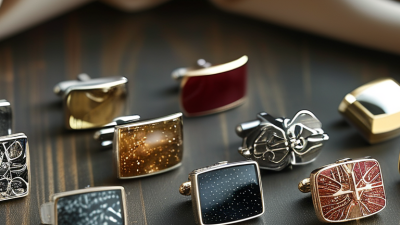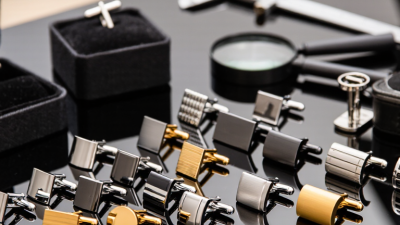
Who Are the Top Bulk Cufflinks Suppliers in China? The answer depends on what a buyer needs: classic metal designs, branded gift sets, or custom finishes. A supplier’s catalogue is only a starting point. Ask for current samples, material details, production timelines, and clear information about minimum order quantities. Small details matter.
Quality-management expert W. Edwards Deming said, “Quality is everyone’s responsibility.” For Bulk Cufflinks, that principle applies at every stage, from metal selection and plating to engraving, inspection, and final packaging. A polished sample can look impressive under showroom lights, yet still leave questions about consistency across a full order. Requesting samples from the same production process can help reveal differences in weight, clasp movement, finish, and presentation.
This guide compares Chinese suppliers through practical buyer considerations rather than catalogue claims alone. It looks at product range, customization, communication, sample handling, and evidence of quality controls. Buyers should also confirm specifications in writing before approving production. That takes checking. No supplier is automatically the right choice for every order, and a low quoted price may not reflect the full cost of packaging, revisions, or delivery. Use the shortlist as a starting point, then verify each detail directly.
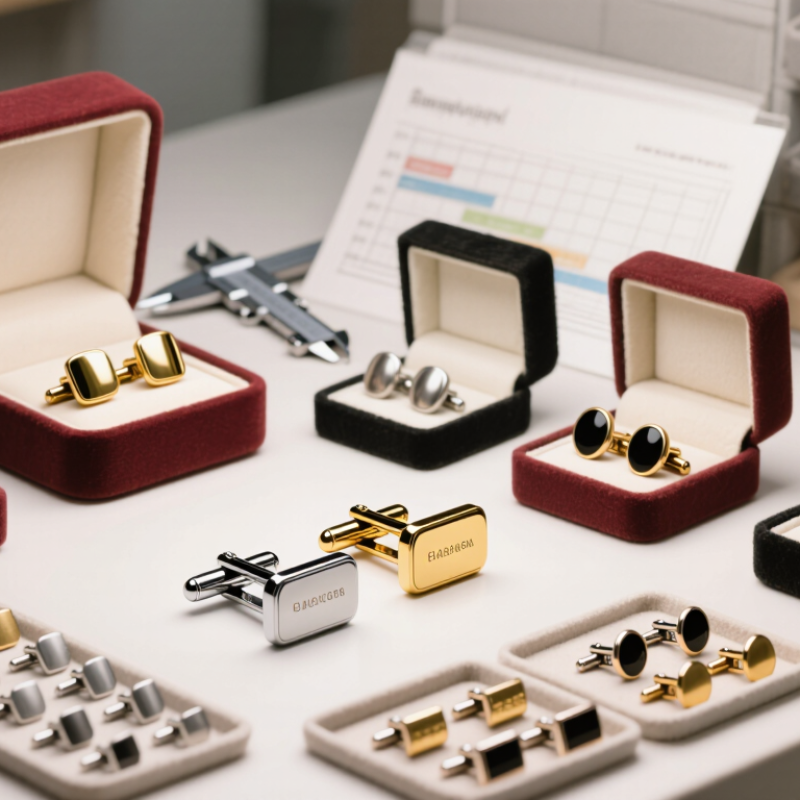
Bulk cufflink suppliers in China commonly offer ready-made designs and custom production. Options may include stainless steel, brass, enamel details, and finishes such as polished silver or matte black. Buyers can often choose shapes, engraving, backing styles, and gift boxes. Small design changes matter. A 1-millimeter border can look different on a finished cufflink than on a screen.
Suppliers may also provide samples, logo engraving, packaging, and quality checks before shipment. Ask for material specifications and a sample made with the same finish as your order. Confirm the minimum order quantity, production time, and packing details in writing. These vary by supplier and design. One point is easy to overlook: a smooth sample does not guarantee every piece will match perfectly in a large batch. Set clear standards for color, dimensions, and acceptable surface marks.
Tips: Request close-up photos in natural light, plus measurements and a written sample approval. Check how cufflinks sit through a shirt cuff. If timing is tight, allow extra days for revisions; production estimates can change.
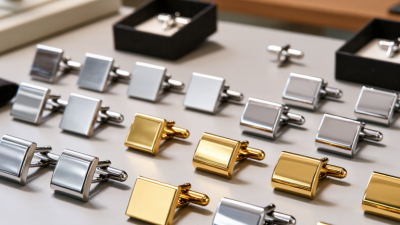
China’s cufflink supply chain usually begins with small metalworking workshops and component suppliers. They provide brass, stainless steel, or plated blanks, hinges, and backing parts. Specialized factories then cut, polish, assemble, and inspect each piece. Packaging vendors often work nearby, making short production runs easier to coordinate.
UNIDO’s International Yearbook of Industrial Statistics 2024 estimates that China generated about 31.8% of global manufacturing value added in 2022. This broad figure is not cufflink-specific, but it helps explain the depth of China’s industrial supplier network. For buyers, the practical advantage is access to metal finishing, engraving, and packaging within one sourcing region.
Details matter. Ask suppliers for metal specifications, plating thickness, sample approval, and inspection records. A bright finish can hide uneven edges, and a polished sample does not guarantee consistent bulk production.
This is where sourcing can get messy. Small workshops may rely on outside finishers, so lead times and quality control can vary between batches. Requesting a pilot order and checking several pieces from different cartons can reveal problems before a larger shipment is planned.
When comparing bulk cufflink suppliers, assess both the product and the process behind it. Request a sample made with the same base metal, plating, and fastening mechanism as the planned order. Check edge smoothness, hinge tension, alignment, and whether the finish rubs off after repeated handling. Small details matter. Ask for a written specification covering dimensions, weight, color reference, packaging, and acceptable defect limits. Supplier photos are useful, but they cannot replace a physical sample viewed under neutral light.
Then compare quality controls, capacity, lead time, and communication. Ask how many units are inspected, which defects trigger rejection, and whether inspection records can be shared. For larger orders, confirm production will match the approved sample, not just a similar item. Request a realistic schedule that includes sampling, production, and packing; vague promises are hard to plan around. Check minimum order quantities and how pricing changes with material or packaging choices. Ask for evidence. Replies with clear measurements and dates are more useful than broad assurances. A polished sample can still conceal inconsistency across a full batch. No checklist removes every risk, and requirements may need refining after the first sample. That extra round can be inconvenient, but it often exposes assumptions early.
For bulk cufflinks, a capable Chinese supplier should offer more than a low unit price. Look for clear options in metal finish, engraving, backing style, and gift packaging. A useful quotation lists material, dimensions, minimum order quantity, and sample fees. Ask for a physical pre-production sample. Small details matter.
Customization works best when artwork and specifications are confirmed before production. Check engraving depth, logo placement, finish color, and whether both cufflinks match. Screen images can misrepresent polished or brushed surfaces. Even a careful approval process may miss a small variation, so define acceptable tolerances in writing.
Quality control should cover more than appearance. Ask how the supplier checks clasp movement, scratches, plating consistency, and pair matching across a batch. Request dated inspection photos or a simple quality report. For order fulfillment, confirm production time, packing method, carton counts, and progress updates before paying the balance. A realistic schedule is more useful than a fast promise. Still, timelines can shift when custom parts need adjustment; leave room for that possibility. Before placing a large order, compare a sample and written process, not just a sales conversation.
The profiles below describe common supplier types in China’s cufflink and metal-accessories market, not named or ranked companies. Capability ranges are indicative and should be confirmed with each supplier before ordering.
| Supplier profile | Typical strengths | Customization options | Indicative MOQ | Quality-control checks to request | Typical order-fulfillment considerations | Best suited for |
|---|---|---|---|---|---|---|
| Integrated metal-accessories manufacturer | May coordinate tooling, metal forming or casting, polishing, plating, assembly, and packing under one production plan. | Custom shapes, logo engraving or stamping, surface finishes, colors, and presentation packaging; tooling may be needed for new designs. | Often around 300–1,000 pairs for customized production; confirm by design, material, and process. | Approve a pre-production sample; inspect dimensions, alignment, finish, plating coverage, clasp operation, and workmanship. Ask for documented inspection criteria. | Ask whether each production stage is in-house or subcontracted. Confirm tooling ownership, production schedule, packing specification, and export-document support. | Bulk buyers needing coordinated custom production and repeat orders. |
| Specialist cufflink factory | Focused product experience with common cufflink mechanisms, including swivel-bar and fixed-back styles. | Engraved faces, enamel details, selected metal finishes, custom shapes, and logo presentation, depending on available processes. | Commonly about 200–500 pairs for standard or lightly customized designs; bespoke tooling can raise the minimum. | Check pair matching, mechanism movement, sharp edges, face-to-back alignment, engraving clarity, and finish consistency across the batch. | Request a sample approval deadline and a written production lead-time estimate; verify that replacement components are available for repeat runs. | Buyers prioritizing product-specific experience and consistent cufflink construction. |
| OEM gift-set manufacturer | Can combine cufflinks with coordinated accessories or retail packaging and manage set assembly. | Custom boxes, inserts, printed sleeves, logo placement, and bundled products; some components may come from partner factories. | Often around 500–1,000 sets, with minimums affected by custom packaging and components. | Inspect the cufflinks and each included item separately; check set contents, packaging dimensions, print color, and packing accuracy. | Confirm the sourcing and inspection responsibilities for all components, packaging approval timing, carton packing, and shipment readiness. | Retailers, corporate-gift buyers, and promotional-product programs ordering complete sets. |
| Trading company with a supplier network | May offer access to multiple product styles and coordinate sourcing, consolidation, communication, and export arrangements. | Options depend on the selected production partners; branding, packaging, and design changes should be confirmed in writing. | Varies widely; some standard designs may be available in smaller lots, while custom production follows the factory’s minimum. | Identify the actual production site where possible. Agree on sample approval, inspection scope, defect limits, and responsibility for corrective action. | Clarify who manages production follow-up, third-party inspection, consolidation, export documents, and communication about delays. | Buyers seeking broader sourcing support or a consolidated order across product categories. |
| Small-batch customization workshop | May support prototypes, short runs, and hands-on design adjustments, subject to equipment and process capacity. | Engraving, limited-run shapes, finish variations, and small packaging changes; complex casting or plating may be outsourced. | Sometimes around 50–200 pairs for simple designs; confirm feasibility and the unit-cost impact of a small run. | Approve a physical sample and verify dimensions, engraving, finish, clasp function, and pair-to-pair consistency before bulk production. | Check available production capacity, subcontracted steps, schedule buffer, packaging, and the workshop’s export or freight arrangements. | Startups, event orders, prototypes, and buyers testing a design before scaling. |
Before placing an order: Request a written quotation covering material specification, sample and tooling fees, MOQ, production lead time, inspection method, packaging, shipping terms, and defect-handling policy. MOQ and lead time are order-specific; confirm them directly rather than treating the indicative ranges above as guaranteed.
Choosing a bulk cufflinks supplier starts with the product, not the lowest quote. Define the metal, finish, fastening style, logo method, and acceptable surface marks. Ask for a pre-production sample and written tolerances. A polished sample can hide variation across hundreds of pieces. I would request a second sample from a later production run, though that adds time.
Match capacity to your order pattern. A wedding retailer may need small, repeat batches; a promotional buyer may need one large run with consistent engraving. Ask for minimum order quantity, monthly capacity, inspection steps, and replacement terms in writing. Compare landed cost, not unit price alone: include packaging, freight, sample fees, and likely defect allowances. The World Bank’s Logistics Performance Index 2023 ranked China 19th overall, but a national score cannot verify one factory’s dispatch reliability.
Plan shipping before confirming the purchase order. UNCTAD’s Review of Maritime Transport 2024 reports that over 80% of world trade by volume moves by sea, so port schedules and freight changes can affect delivery plans. Request a production timeline with approval, manufacturing, inspection, and dispatch dates. Ask how the supplier handles late material arrivals. Keep a modest schedule buffer; it may feel excessive until a shipment slips.
How to Match a Supplier to Your Business Needs
Use this buyer-fit framework to guide supplier selection: stock wholesalers may suit speed and small orders, trading companies can offer sourcing flexibility, and manufacturers may be a better fit for custom designs and larger production runs. Scores are illustrative guide values, not market-survey results or ratings of specific suppliers. Verify capabilities, minimum order quantities, lead times, and quality controls directly with each supplier.