Leave Your Message

Title*

First Name*

Last Name*

Phone*

country*

Message*

Customized Request

China Best Cufflink Wholesale Supplier for Global Buyers?

China’s role in global accessory sourcing is expanding, yet cufflinks require more than low factory pricing. Buyers need consistent plating, accurate engraving, dependable packaging, and clear export documentation. A polished sample may look impressive under showroom lights. The real test appears after repeated wear.

Grand View Research valued the global jewelry market at approximately USD 353.26 billion in 2023. It forecasts an 8.5% compound annual growth rate from 2024 to 2030. McKinsey and The Business of Fashion also identify jewelry as one of fashion’s stronger growth categories. These reports do not isolate cufflinks. That limitation matters. Market size alone cannot prove supplier reliability.

Edahn Golan, an independent jewelry industry analyst, has stated, “Jewelry demand is emotional, but purchasing decisions are increasingly data-driven.” His observation fits Cufflink Wholesale sourcing. Buyers should compare defect rates, material certificates, lead times, and reorder stability. Small details matter. A loose swivel bar can damage a retailer’s reputation faster than a delayed shipment.

This guide examines China’s leading wholesale options through a practical lens. It considers manufacturing experience, customization capacity, inspection procedures, minimum order quantities, and communication quality. It also questions attractive claims that lack evidence. A supplier may offer stainless steel, brass, sterling silver, or gold-plated designs. However, material names can mislead without verified specifications.

The strongest partner is not always the cheapest one. Sometimes, the safer choice costs slightly more. That may be the uncomfortable truth.
China Best Cufflink Wholesale Supplier for Global Buyers?

China Cufflink Wholesale Market Scope: HS 7117.19 and Global Buyer Demand

China’s cufflink wholesale market is often evaluated under HS 7117.19, covering imitation jewellery of base metal, whether or not plated. Cufflinks may fit this heading when their materials and construction meet the applicable customs definition. Classification can change with precious-metal content, stones, or national tariff rules. Buyers should confirm the code with a licensed customs professional before shipment.

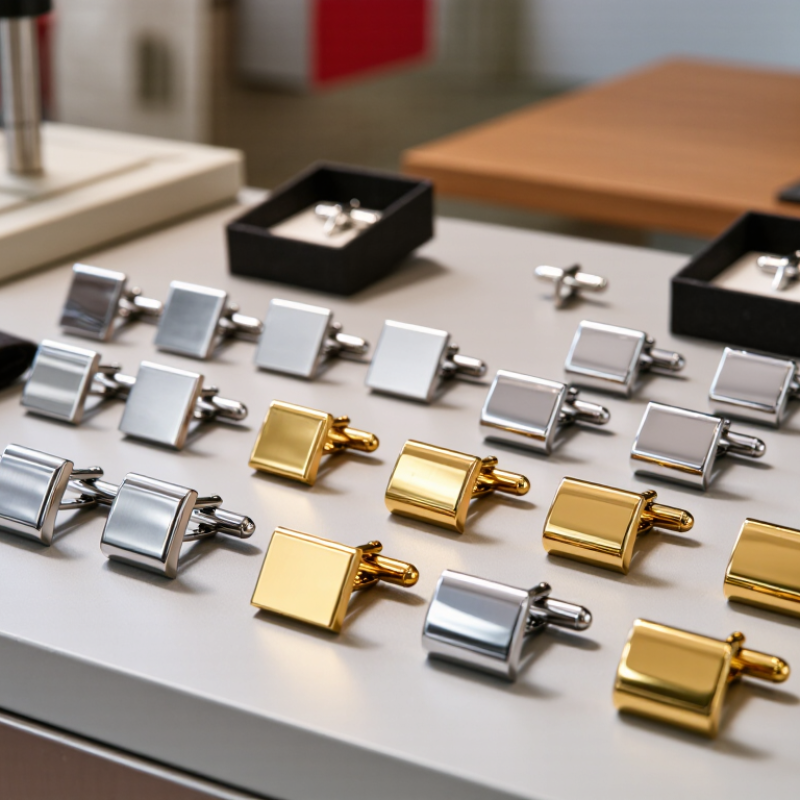
Global demand is moving toward affordable formal accessories with dependable finishing. Wholesale buyers commonly request stainless steel or brass bodies, polished edges, secure swivel bars, and plating that survives repeated handling.

A sample inspection should check hinge movement, pair matching, surface color, and packaging strength. Product photographs are not enough. They hide loose joints.

For overseas orders, suppliers usually need clear specifications for metal composition, dimensions, plating thickness, carton quantity, and acceptable defect rates. Small trial orders can reveal production consistency before larger purchasing.

Custom initials and simple geometric shapes remain useful for corporate gifts and wedding attire. Yet demand is not perfectly predictable. Some buyers overestimate seasonal sales and hold excess stock.

A better forecast uses past order data, destination preferences, and realistic replenishment time. The market looks broad, but every tariff line still needs careful verification.

Supplier Evaluation: MOQ, 30–60-Day Lead Times, Capacity, and Quality Data

China Best Cufflink Wholesale Supplier for Global Buyers?

A reliable cufflink supplier should match your order size, timeline, and quality expectations. In supplier evaluations, I compare MOQ with sales forecasts, not just quoted prices. A 300-pair MOQ may suit a test order, while larger programs need flexible replenishment. Ask whether mixed finishes or packaging count toward the MOQ. Small details matter.

A 30–60-day lead time is common for customized cufflinks, especially when molds, engraving, plating, or gift boxes are involved. Request a written production schedule with sampling, approval, manufacturing, and inspection dates. Also review monthly capacity, backup equipment, and peak-season planning. Capacity claims need evidence. Production photos, recent inspection records, and clear communication are stronger than impressive promises.

Tips: Request samples from the same production line, not showroom pieces. Check hinge movement, surface consistency, engraving depth, plating adhesion, and packaging protection. Ask for measurable quality data, such as defect rates, inspection checklists, and batch traceability. A third-party inspection can reduce uncertainty, though it cannot replace practical judgment. I have seen polished samples hide uneven edges in bulk orders. That is a useful warning. Suppliers should welcome reasonable questions and explain weak points without evasive language. If every answer sounds perfect, review the evidence again.

Cufflink Manufacturing: Materials, Plating Thickness, and ISO 9001 Controls

China Best Cufflink Wholesale Supplier for Global Buyers?

Cufflink manufacturing starts with material selection, not surface decoration. Brass offers easy shaping and a warm foundation for detailed designs. Stainless steel provides stronger resistance to daily wear and moisture. Sterling silver feels more premium, but it needs careful polishing and tarnish control. In production, I have seen attractive samples fail because the base metal was too soft. Small details matter.

Plating thickness should match the customer’s use. A thin decorative layer may suit occasional fashion pieces. Frequent-use cufflinks need tighter control, often measured in microns with X-ray fluorescence testing. Gold-tone, silver-tone, and darker finishes can show uneven color when polishing pressure changes. Adhesion tests, abrasion checks, and salt-spray testing help reveal weak surfaces. They are not perfect predictors.

ISO 9001 controls turn these checks into repeatable work. A reliable supplier should record incoming metal inspections, approved samples, machine settings, and final inspection results. Each production lot should remain traceable. Inspectors can check clasp movement, engraving clarity, plating coverage, and packaging damage. Yet inspection systems sometimes miss defects between sampling points. That weakness deserves review, not concealment. Clear corrective-action records show whether the factory learns from rejected pieces. For global wholesale buyers, practical evidence is stronger than polished promises.

Global Compliance: REACH, EN 1811 Nickel Limits, and Packaging Standards

China Best Cufflink Wholesale Supplier for Global Buyers?

For global cufflink buyers, compliance begins before production. A reliable supplier should identify every metal component, coating, and contact surface. REACH requirements matter when products enter the European market. Nickel release must be tested under EN 1811, especially for parts touching skin repeatedly. The commonly applied limit is 0.5 μg/cm²/week for prolonged skin contact. Piercing products follow a stricter threshold. Cufflinks are not piercing items, but classification still needs careful review.

Ask for recent laboratory reports, not only a supplier declaration. Reports should match the actual alloy, plating, and production batch. Samples can pass while mass production changes. This happens when polishing compounds or base metals are substituted.

Our practical checks include incoming material records, coating thickness checks, and random nickel-release testing. Small details matter. A loose coating can create a compliance risk after repeated wear.

Packaging also deserves technical attention. Export cartons should resist moisture, crushing, and surface scratches during long transport. Individual boxes need clear material information, safe closures, and accurate product quantities.

Buyers may also require recyclable components or country-specific packaging labels. Requirements differ across markets, so one universal package is rarely enough.

We have found that packaging documents are sometimes incomplete, even when product testing is strong. That weakness needs correction before shipment. A dependable wholesale partner keeps test reports, packaging specifications, inspection photos, and corrective-action records together for review.

Wholesale Cost and Logistics: EXW, FOB, MOQ Pricing, and Import Duties

China Best Cufflink Wholesale Supplier for Global Buyers?

Wholesale cufflink pricing depends on material, plating, packaging, and order volume. A reliable supplier should provide a clear quotation with EXW and FOB options. EXW usually excludes inland transport, export handling, and loading costs. FOB includes delivery to the named port, but ocean freight remains separate. Numbers need context. Request a written cost breakdown before comparing suppliers.

MOQ pricing can change sharply between 100, 500, and 1,000 pairs. Larger orders may reduce unit costs, yet they increase inventory risk. Ask for samples before confirming bulk production. Check the clasp movement, surface finish, engraving accuracy, and individual packaging. Small details matter. A low quote can look attractive, but it may omit inspection, cartons, or port charges.

Import duties depend on the destination country, product classification, customs value, and trade rules. Confirm the correct HS code with a licensed customs professional, rather than relying only on a supplier’s estimate. Build a landed-cost sheet covering goods, freight, insurance, duty, VAT, broker fees, and local delivery. Allow extra time for document corrections and port delays. My practical view is imperfect: forecasts are useful, but they should be reviewed when freight rates or regulations change.