In 2026, global buyers are searching for Factory Low Price Cufflinks that balance cost, appearance, and dependable delivery. The challenge is simple. Cheap products can become expensive after defects, delays, and customer returns.
Industry reports offer useful direction, but cufflinks rarely receive separate market statistics. Grand View Research’s jewelry market analysis highlights continued demand for affordable, design-led accessories. McKinsey’s consumer research also shows stronger price sensitivity and higher expectations for product value. These findings support a practical sourcing question: does the factory price still work after plating, packaging, inspection, freight, and import costs?
Not always.
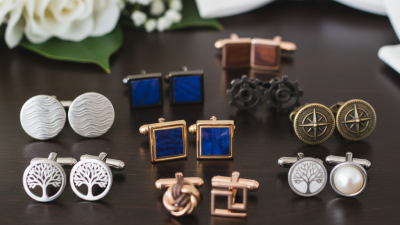
The best suppliers should provide clear material specifications, such as stainless steel, brass, or sterling silver. Buyers should examine plating thickness, clasp movement, logo accuracy, and surface scratches. A black gift box may look attractive, but weak hinges can damage the buyer’s brand image. Sample approval remains essential.
The WTO World Trade Statistical Review emphasizes the importance of reliable merchandise trade data and changing global supply conditions. Meanwhile, OECD due diligence guidance encourages buyers to review supplier transparency, labor practices, and responsible sourcing risks. These standards matter even for small accessories.
A strong 2026 comparison should therefore measure more than the lowest quotation. It should examine minimum order quantity, production capacity, sample lead time, defect handling, packaging options, and trade terms. Factory audits and third-party inspections can add cost, but they reduce uncertainty.
The comparison is not perfect.
Some factories quote low prices with incomplete specifications. Others offer better quality but communicate poorly. This guide evaluates Factory Low Price Cufflinks through a buyer’s real purchasing process, combining reported market insights with practical factory-level checks.
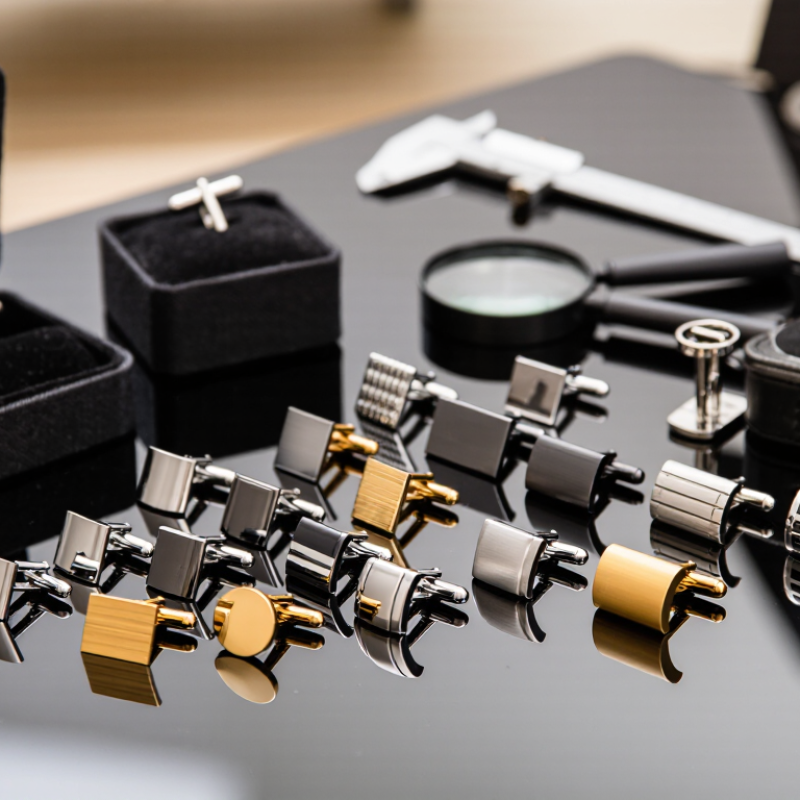
For 2026 sourcing, low-price cufflinks require more than comparing factory quotations. Steel and brass models often offer stable costs, strong durability, and easy polishing. Silver versions feel more premium but need purity documents and careful oxidation control. The World Silver Survey 2024 reported record industrial silver demand of 654.4 million ounces in 2023. That pressure can influence silver-based accessory costs. World Gold Council data also recorded global jewellery demand at about 1,877 tonnes in 2023, showing continued interest in precious-metal products.
HS classification needs practical verification. HS 7117 generally covers imitation jewellery, including many steel and brass cufflinks. HS 7113 covers jewellery articles made from precious metal, including qualifying silver cufflinks. However, plating, alloy content, packaging, and national tariff rules can change the final code. A supplier’s old declaration is not enough. Request material composition, silver fineness, product photos, and a customs ruling where possible. One small mistake can delay a shipment.
Tips: Ask for separate prices by steel, brass, and silver content. Compare weight, plating thickness, rejection rates, and carton protection. I have seen “factory low price” offers become expensive after polishing defects and rework. Samples should include hinge strength tests and repeated opening cycles. The process is not perfect; even a clear specification can miss a local customs interpretation. Review the code with an experienced broker before placing a large order.

For 2026 sourcing, FOB remains a practical factory price benchmark for cufflinks. It includes production, export clearance, and delivery to the named port. It excludes ocean freight, insurance, and destination charges. The ICC Incoterms 2020 rules clearly separate these responsibilities. Buyers should request FOB quotations beside EXW and DDP offers. Comparisons become more reliable.
A basic alloy or stainless-steel pair may quote around US$0.80–2.50 FOB at higher MOQs. Premium finishes, engraving, gift boxes, and stricter inspections increase the price. These figures are working market ranges, not official tariffs. Actual costs depend on plating thickness, packaging, order volume, and testing. The WTO reported a 1.2% decline in global merchandise trade volume during 2023. That weakness reminds buyers to avoid optimistic demand forecasts. A cheap sample can still become an expensive bulk order.
Tips: Ask for prices at 100, 500, and 2,000 pairs. Confirm whether the MOQ applies per design or total order. Request plating samples and a written defect standard. Check the FOB port carefully. Freight rates can change the landed cost sharply, as highlighted by UNCTAD’s Review of Maritime Transport 2024. I would also compare payment terms, inspection fees, carton dimensions, and production lead time. One overlooked detail can erase the factory-price advantage.
2026 Best Factory Low Price Cufflinks for Global Buyers?
Low price should never mean uncertain plating or uncontrolled defects. ISO 2859-1 AQL sampling gives buyers a repeatable inspection structure. It defines lot size, inspection level, sample quantity, and acceptance numbers. An AQL is not a promise that every piece is perfect. That distinction matters.
For each production lot, inspectors should check scratches, loose backs, uneven color, and incomplete polishing. Plating thickness deserves separate measurement. X-ray fluorescence testing can verify coating thickness without damaging the cufflink. Request calibrated equipment records, test points, and readings from edges, faces, and recesses. A shiny surface can hide thin coverage. It happens.
The 2024 Retail Returns Report from NRF and Appriss Retail estimated that 16.9% of annual retail sales were returned in 2024, representing about 890 billion dollars. Small accessories still create large costs when defects reach customers. A documented AQL report reduces that risk, especially for mixed global shipments. The Silver Institute’s World Silver Survey 2024 also reported record industrial silver demand in 2023, showing why material and finish inputs need monitoring. Low-cost buyers should compare plating thickness, base-metal consistency, packaging protection, and rejection rules together. Our early factory checks exposed a weakness: visual inspection alone missed thin coating inside hinge areas. ISO 2859-1 helped, but only after the inspection plan became specific.
For global buyers seeking low-price cufflinks in 2026, supplier verification should come before price negotiation. A factory may offer polished samples and fast replies. That proves little.
Request current BSCI assessment records and review the scope, facility address, and audit date. BSCI findings can reveal excessive working hours, weak worker protection, or poor documentation. Sedex membership alone is not proof of compliance. Ask for the latest SMETA audit report and corrective-action evidence. Check whether the report covers the actual cufflink production site. Details matter. A trading office cannot replace a manufacturing audit.
ISO 9001 shows that a factory operates a documented quality management system. It does not guarantee flawless cufflinks. Ask how inspectors check plating color, hinge movement, engraving depth, and surface scratches. During an independent factory audit, compare purchase records with production capacity. Walk through packaging areas. Count finished cartons. Photograph batch labels and inspection sheets. These small checks can expose inconsistent claims.
No audit is perfect. A clean report may miss problems between visits. I would still request recent payroll samples, worker interviews, and follow-up records. One overlooked weakness can damage an entire shipment. Buyers should also approve a sealed pre-production sample and define rejection standards in writing. Low prices become useful only when traceability, workmanship, and corrective action remain visible.
Supplier Verification Through BSCI, Sedex, ISO 9001, and Factory Audits
Buyer-focused comparison of commonly requested social-compliance, quality-management, and factory-verification evidence. Certification, audit, and price information should always be checked against current documents issued for the specific production site.
| Verification or Buying Dimension | What It Actually Demonstrates | Evidence to Request | Buyer Interpretation | Recommended Follow-Up |
|---|---|---|---|---|
| BSCI | A social-performance assessment framework used to evaluate working conditions and responsible business practices in a supply chain. | Current amfori BSCI audit report, audit date, production-site address, scope, result, and corrective-action status. | BSCI is not an ISO-style product certificate. A report applies to the assessed site and audit scope. | Confirm that the legal entity, physical factory, workforce, and cufflink production location match the documents. |
| Sedex / SMETA | Sedex is a supply-chain data-sharing platform; SMETA is an audit methodology commonly used to assess labour, health and safety, environment, and business ethics. | Sedex site reference, complete SMETA report, audit type, audit date, findings, and corrective-action plan. | SMETA reports findings rather than providing a universal pass/fail certification. | Review major and critical findings, worker interviews, site photographs, and closure evidence instead of relying only on a logo. |
| ISO 9001 | A quality-management-system standard covering controlled processes, customer requirements, records, corrective action, and continual improvement. | Valid certificate, certificate number, certification scope, factory address, issue date, expiry date, and certification-body details. | ISO 9001 does not guarantee that every cufflink is defect-free and does not certify a product design. | Check whether the scope covers manufacturing and quality control for the relevant metal accessories. |
| Independent Factory Audit | A point-in-time review of legal identity, capacity, production processes, labour practices, safety controls, and quality systems. | Auditor identity, audit date, site address, production-line photographs, employee count, machinery list, and non-conformity report. | An audit reduces information risk but cannot eliminate production, delivery, or compliance risk. | Use a recent on-site audit and repeat checks for high-value or recurring orders. |
| Legal and Export Verification | Confirms that the contracting entity and production site can legally manufacture, sell, and export the goods. | Business registration, tax or export registration where applicable, bank-account consistency, and signed company seal or authorization. | A trading intermediary may not control the factory or be able to guarantee factory-level compliance. | Compare the name and address across the quotation, invoice, certificate, audit report, and payment account. |
| Material Disclosure | Identifies the base metal, plating, coating, stones, packaging materials, and any restricted-substance requirements. | Material declaration, plating specification, coating thickness target, and laboratory test reports where required by the destination market. | “Stainless steel,” “silver tone,” or “nickel-free” should not be accepted without a defined specification or test basis. | Approve a reference sample before mass production and define acceptable limits in the purchase order. |
| Quality-Control Plan | Shows how incoming materials, in-process work, plating, assembly, packaging, and final shipment are inspected. | Inspection checklist, sampling plan, defect classification, calibration records, and final inspection report. | A low unit price is meaningful only when quality limits and inspection responsibilities are documented. | Set critical, major, and minor defect criteria before approving the purchase order. |
| Order Traceability | Links raw materials, production batches, inspection records, packaging, and shipment documents to one purchase order. | Batch codes, carton marks, production records, inspection photos, packing list, and retained reference sample. | Traceability supports faster investigation when plating, clasp, engraving, or packaging problems occur. | Require batch identification on cartons and retain approved samples for comparison. |
| Product Specification | Typical Factory-Direct Positioning | Main Cost Drivers | Price-Control Recommendation |
|---|---|---|---|
| Basic metal cufflinks | Generally the lowest-cost category when using a standard shape, standard finish, and larger production quantity. | Metal weight, casting or stamping method, polishing time, plating, packaging, and order quantity. | Request a full specification sheet and separate tooling, sample, packaging, and freight charges from the unit price. |
| Enamel or colored designs | Usually priced above plain finishes because color filling and inspection add process steps. | Number of colors, color matching, filling accuracy, curing, rework, and design complexity. | Approve a color standard or physical sample and define allowable shade variation. |
| Custom logo or engraving | Requires artwork approval and may involve a one-time tooling or setup charge. | Logo size, engraving depth, mold or laser setup, artwork revisions, and minimum order quantity. | Obtain written approval for artwork ownership, proofing, setup fees, and defect tolerances. |
| Gift-ready packaging | Adds cost compared with bulk polybags or simple paper boxes. | Box material, insert, printing, assembly, carton dimensions, and protective requirements during transport. | Compare the landed cost, not only the cufflink unit price, and confirm packaging drop-test expectations when relevant. |
2026 Best Factory Low Price Cufflinks for Global Buyers
Global Buyer Selection Matrix: Landed Cost, Lead Time, MOQ, and Compliance
A low factory quote rarely shows the real landed cost. Add plating, custom molds, sample freight, insurance, duties, and local delivery. For one recent sourcing review, a lower unit price became more expensive after air freight and repacking. Calculate cost per delivered pair, not cost per factory carton. Ask for a written quotation with metal grade, finish, packaging, and currency clearly stated.
Lead time needs practical checking. A supplier may promise 20 days, but plating queues and export documentation can add another week. Request a production schedule with approval dates, inspection time, and shipping milestones. Smaller orders may require a higher MOQ, while mixed finishes can increase production complexity. A useful matrix compares unit cost, MOQ, sample time, bulk lead time, payment terms, and reorder flexibility. Keep the figures visible.
Compliance should be verified before purchase orders. Request material declarations and test reports for restricted substances, especially nickel release and surface coating safety. Confirm labeling, packaging, and documentation requirements with the destination market’s current rules. Independent pre-shipment inspection can check dimensions, clasp movement, scratches, color consistency, and carton counts. Do not trust photographs alone. One weakness remains: test reports may cover a similar item, not the exact batch. Require batch-linked evidence where possible, and record every exception before approval.
Global Buyer Selection Matrix: Landed Cost, Lead Time, MOQ, and Compliance
| Product Configuration | Estimated Landed Cost / Dozen | Lead Time | MOQ / Dozen | Compliance Documentation | Weighted Score |
|---|---|---|---|---|---|
| Economy plated brass | US$11.80 | 25 business days | 100 | Basic material and nickel-release documentation | 64 |
| Standard stainless steel | US$15.40 | 22 business days | 80 | REACH and nickel-release documentation | 78 |
| Recycled brass with PVD finish | US$18.90 | 28 business days | 120 | REACH, nickel-release, and recycled-content evidence | 73 |
| Custom gift-box set | US$23.50 | 35 business days | 200 | REACH, packaging, labeling, and nickel-release documentation | 69 |
The weighted score uses a 35% landed-cost, 25% lead-time, 20% MOQ, and 20% compliance-documentation weighting. Landed-cost figures are benchmark estimates for standard export orders and may vary with destination, freight mode, tariffs, packaging, and order volume. Buyers should request current quotations and test reports before placing an order.