How to Wear Watch Cufflinks?
Watch Cufflinks add a small, distinctive detail to formal clothing, but they work best when the rest of the outfit stays balanced. Most designs resemble miniature watch faces; they are decorative accessories, not reliable timepieces. Wear them with a French-cuff shirt, where the paired openings are made to be fastened with cufflinks. Not every shirt is compatible. A standard button cuff usually lacks the necessary holes.
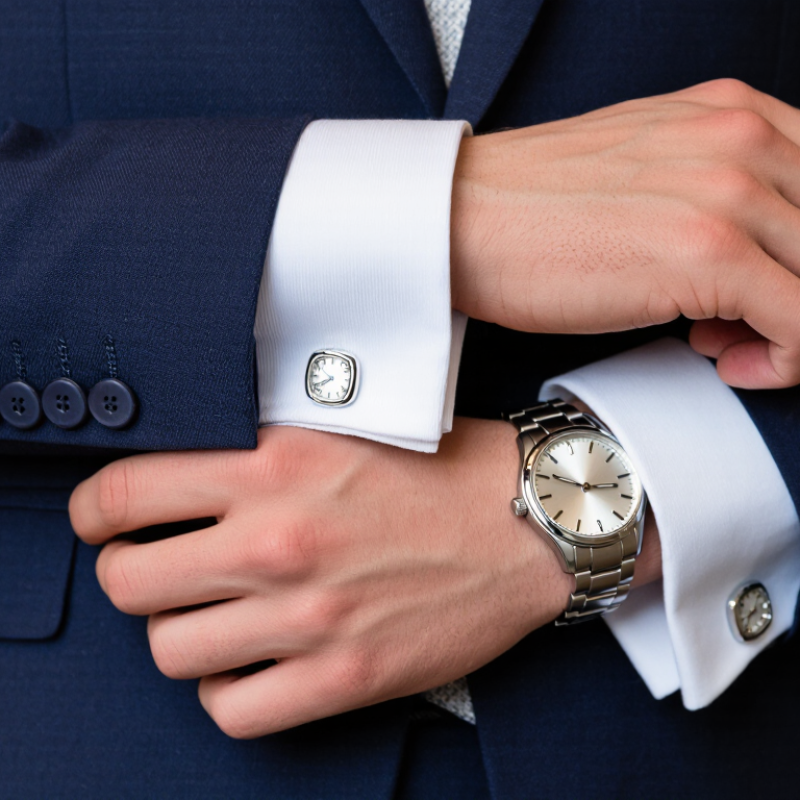
Start with clean, pressed cuffs. Fold each cuff back so its edges meet, then line up the openings. Slide the cufflink post through all layers and secure its backing, following the design’s mechanism. It should feel snug, not tight. Never force it. A stiff post can snag delicate fabric, and a loose fitting may turn or slip out during the day. Check both cuffs in a mirror. The watch faces should sit visibly on the outside of your wrists.
Keep the other accessories restrained. A simple wristwatch, a neat suit, and understated metal details can help the cufflinks stand out without competing for attention. Matching every metal is not essential, though a deliberate combination often looks more polished. Small details matter. Consider the cufflink size, shirt color, and occasion before choosing a pair. Some watch-inspired styles are bulkier than they appear online, so check their dimensions when possible. The result may not look perfect on every shirt or wrist. That is worth considering before you dress.
Understand the Design and Parts of Watch Cufflinks
Watch cufflinks combine a miniature watch face with the familiar fastening parts of a cufflink. The visible face may contain working hands, a fixed decorative dial, or a small glass cover. Turn the piece over. You may find a hinged post, a short bar, and a toggle that passes through the shirt cuff. Designs vary, so check whether the mechanism actually moves before treating it like a watch. Small parts matter.
The case frames the dial, while the post and toggle secure the cufflink through the buttonhole. On some pairs, a hinge folds the post flat; others use a rotating bar. Look for smooth edges and a hinge that opens without force. I’ve found that a neat face can still feel awkward if the rear fitting catches fabric. That detail is easy to miss. For material context, the World Gold Council’s Gold Demand Trends: Full Year 2024 reported about 2,093 tonnes of global gold-jewellery demand. That figure covers jewellery broadly, not watch cufflinks specifically, but it shows why metal choice can affect weight and finish. A heavier case may look substantial yet pull at a fine cuff. Check the fit with the shirt you plan to wear.
Choose a Shirt with Compatible Cuff Openings
To wear watch cufflinks comfortably, start with a shirt that has compatible cuff openings. French cuffs are a reliable choice: each cuff folds back, and its paired buttonholes let the cufflink pass through both layers. Convertible cuffs can also work when their openings are designed for cufflinks. A standard button cuff usually cannot, unless it has an extra buttonhole.
Check the openings before dressing. The cufflink post should pass through without forcing the fabric, and the watch face should sit outside the cuff rather than press against your wrist. Too snug? The cuff may pull when you bend your arm. Too loose, and the watch face can twist or catch on the sleeve. A little movement is normal. Try the shirt on and reach forward, as if picking up a cup; the cuff should stay comfortable and the watch should remain visible.
Fabric matters, too. Thick, stiff cuffs can make a large watch cufflink feel bulky, while very soft fabric may sag around it. Match the cuff opening to the cufflink’s post and fastening style, then check that both sides lie flat. I have found that a mirror helps, but it does not show how the cuff feels after an hour. Wear the combination briefly at home before choosing it for a long event; sometimes a cuff that looks right still needs a different shirt.
How to Wear Watch Cufflinks? – Choose a Shirt with Compatible Cuff Openings
| Shirt Cuff Type |
How It Fastens |
Compatible with Watch Cufflinks? |
What to Check |
How to Wear Them |
| French (double) cuff |
The cuff folds back and is secured through aligned buttonholes. |
Yes |
Confirm that the cuff has a buttonhole on each side and that the cufflink bar or fastening can pass through both layers. |
Fold the cuff back, align the openings, insert the cufflink, and secure its backing. Position the watch face on the outer side of the cuff. |
| Convertible cuff |
Can be fastened with a sewn button or with a cufflink, depending on the cuff design. |
Usually, if cufflink openings are provided |
Look for a separate buttonhole opposite the button, or follow the shirt’s care or fitting information. A button-only convertible cuff will not take a cufflink. |
Use the cufflink openings rather than forcing the cufflink through the buttonhole or fabric. |
| Barrel (button) cuff |
One side overlaps the other and a sewn button passes through a buttonhole. |
No, unless it also has dedicated cufflink openings |
A standard barrel cuff generally has no paired cufflink holes. Do not cut or stretch the buttonhole to make one fit. |
Wear the cuff with its button as designed, or choose a shirt with French or cufflink-compatible convertible cuffs. |
| Single cuff with cufflink holes |
A single-layer cuff is secured through paired buttonholes with a cufflink. |
Yes, if the cufflink fits the openings |
Check that the cuff has two aligned openings and enough room for the watch-cufflink body and fastening. |
Insert the cufflink through both openings and secure it without pulling the cuff tightly around the wrist. |
| Any compatible cuff: fit and comfort |
The cuff closes around the wrist using its cufflink openings. |
Depends on cufflink dimensions and cuff fit |
Check the cufflink’s post length and fastening, the opening size, and whether the closed cuff allows comfortable wrist movement. |
Put on the shirt, fold the cuff if needed, fasten the cufflink, and make sure the watch face is visible and does not press uncomfortably against the wrist. |
Tip: Watch cufflinks attach like other cufflinks; the shirt must have compatible cufflink openings. Check the cufflink’s fastening instructions, since designs may use different posts or closures.
Align the Cuff Layers and Cufflink Holes
Before fastening watch cufflinks, let the shirt cuff fall naturally around your wrist. Fold the cuff evenly, then bring its two edges together without twisting the fabric. The cufflink holes should sit directly opposite each other. Look through them before inserting the cufflink; even a small offset can make the cuff pull sideways. Check in a mirror. The cuff should feel secure, not tight, and the sleeve should still bend comfortably when you reach for something.
Pass the cufflink through every aligned layer, then close its fastening gently. If the design has a watch face, turn it outward so it remains visible rather than pressed against your wrist. Keep the cuff smooth around the clasp; a ridge of fabric can rub your skin or catch beneath a jacket sleeve. A small mistake is easy to miss. If one edge looks higher, undo the link and realign the layers instead of tugging the shirt into place. The fit may still look slightly uneven, especially with soft or worn cuffs, so check both wrists while standing naturally. Don’t force the holes. A few seconds of adjustment usually gives a cleaner, more comfortable result.
Insert and Fasten the Watch Cufflinks
Start with a clean, buttoned shirt cuff and let the fabric lie flat. Open the cufflink’s fastening bar or toggle, depending on its design. Push the decorative face through the cuff’s buttonholes from the outside, so it sits visibly on top of your wrist. If the holes seem tight, adjust the fabric rather than forcing the metal through. A small tug can distort the cuff.
Now turn your wrist and guide the fastening bar through the opening on the other side. Rotate it across the back of the cuff so it rests crosswise and holds the layers together. Keep it gentle. The cuff should feel secure, not pinched. With a hinged mechanism, open the bar fully before inserting it, then close it until it sits flat. Different styles fasten differently, so check the moving parts before dressing.
Check the watch face in a mirror and make sure it points outward instead of tilting toward your palm. Raise and lower your arm once. The cufflink should stay in place while the cuff still bends comfortably. If it catches on fabric, open it and try again; pulling harder usually makes the fit worse. That second attempt can feel awkward, but it helps you see whether the bar is aligned with both layers of cloth.
Check the Fit, Visibility, and Wrist Movement
How to Wear Watch Cufflinks?
Watch cufflinks add a small, polished detail to a French-cuff shirt. Insert them through the cuff holes and fasten them so the decorated faces sit on the outside of your wrists. The cuff should feel secure, not tight. You should be able to slide a finger beneath the fabric without forcing it. If the cuff pulls across your wrist or bunches near your hand, the fit may be too close.
Check visibility with your arms relaxed at your sides. The watch faces should peek out naturally when your jacket sleeves move, rather than remain hidden or catch on the sleeve lining. Then bend your wrists, reach for a glass, and rest your hands on a table. Nothing should pinch or snag. A mirror can help, but it may not show how the cuffs shift during normal movement. I sometimes find one side sits higher than the other; adjust each cuff separately.
Tips: Wear them with a shirt whose cuff holes align cleanly. Keep the cuff fabric smooth around the fastener. Try them with your jacket on, too. If movement feels restricted, loosen the cuff or choose another shirt. Comfort matters more than perfect symmetry.