Leave Your Message

Title*

First Name*

Last Name*

Phone*

country*

Message*

Customized Request

How to Find the Best Cufflink Factory?

Choosing the right Cufflink Factory affects product quality, delivery consistency, and the confidence buyers can place in each order. A polished sample is useful, but it cannot show how a supplier handles repeated production, material checks, or a delayed shipment. Details matter. Look beyond catalog photographs and ask how the factory controls dimensions, plating, engraving, and final inspection.

The World Bank’s 2023 Logistics Performance Index assesses 139 economies across customs, infrastructure, shipment arrangements, logistics competence, tracking, and timeliness. It does not rank cufflink manufacturers, but its framework highlights a practical sourcing point: reliable production also depends on dependable logistics. Ask factories for documented lead times, export experience, and clear responses when schedules change. Then compare those answers with sample quality, minimum order quantities, communication, and quality-control records. Proof matters.

A useful evaluation starts with specific questions. Can the factory provide a pre-production sample? How are finish defects recorded and corrected? Which materials and packaging options can it verify? Request recent examples, not only broad promises. A brief factory call may reveal who actually manages your order and how clearly they explain problems. No checklist is perfect. Samples can disappoint, and written claims need checking. Still, comparing evidence from several suppliers gives buyers a more grounded way to identify a Cufflink Factory that suits their product, budget, and delivery needs.
How to Find the Best Cufflink Factory?

Define Your Cufflink Product and Production Requirements

Before contacting a cufflink factory, decide what the wearer should notice first: shape, weight, finish, or personalization. Record dimensions in millimeters, including face width, thickness, and post length. Specify the base material, surface color, and fastening style, such as a whale-back or fixed-bar closure. Small details matter. If you want engraving or enamel, provide a clear artwork file and note its placement.

Describe the cufflinks’ intended use and price level. A lightweight promotional pair has different needs from a substantial gift pair. State your target order quantity, acceptable unit cost, delivery window, and packaging requirements. Include finish references, but also describe measurable features, such as brushed grain direction, mirror polish, or acceptable color variation.

Ask the factory to review feasibility before tooling begins. Request a pre-production sample and check alignment, closure tension, edge smoothness, and engraving legibility under ordinary light. Keep a written record of approvals and agreed changes. Requirements may shift once you hold the sample; acknowledging that possibility early is more useful than treating the first drawing as perfect.
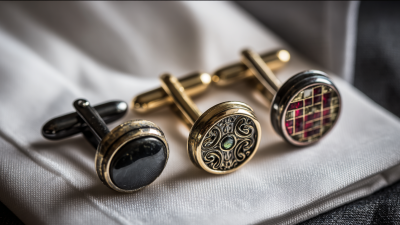
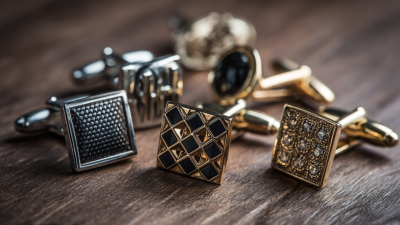
Research and Shortlist Specialized Cufflink Factories

Research factories that regularly make cufflinks, not general gift suppliers with a broad catalog. Look for demonstrated experience with your chosen materials, closures, engraving, and surface finishes. Grand View Research estimated the global jewelry market at USD 353.26 billion in 2023. That figure signals a large, varied sector; it does not prove a factory can meet your specifications. Ask for process-specific examples and current production photos.

Compare shortlisted factories using the same brief. Specify dimensions, base material, plating, logo placement, target quantity, and packaging. Request samples that show the T-bar or chain mechanism, edge finishing, and engraving depth. Small details matter. Check whether the pair closes smoothly and whether plating looks even around corners. Ask for written inspection criteria, defect handling, sample and production lead times, and minimum order quantities. A polished sample alone is weak evidence.

Use independent checks where possible, such as a live video walkthrough or a third-party factory assessment. The World Gold Council’s Gold Demand Trends: Full Year 2024 reported global gold jewelry demand of 1,877 tonnes, down 11% year over year. This is a material-market indicator, not a cufflink forecast; use it only when evaluating gold-related sourcing assumptions. Then compare. I would not treat the cheapest quotation as the best option: unclear material grades or inspection terms can create costly surprises. Keep a short record of each factory’s answers, sample results, and unresolved questions.

Assess Manufacturing Capabilities, Materials, and Quality Controls

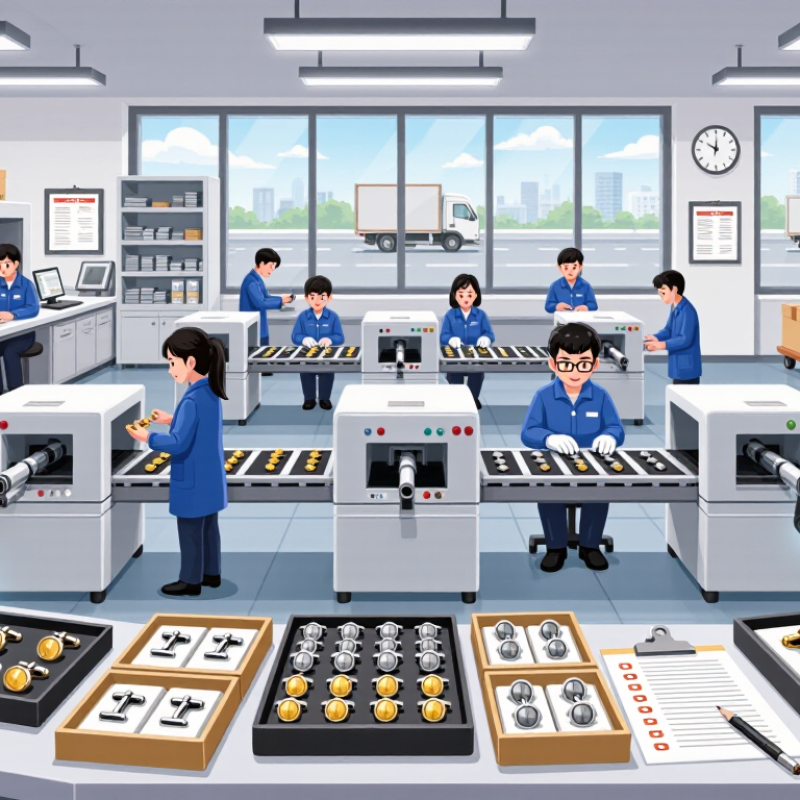
When comparing a cufflink factory, look beyond its product photos. Ask which operations happen in-house: casting, soldering, polishing, engraving, and assembly. Outsourcing is not automatically a problem, but each handoff should have clear inspection records. Request a recent production sample, not only a showroom piece. No process is flawless.

Materials affect both appearance and wear. Ask for the exact base metal and finish, then check that supplier documents match the materials used. For plated designs, ask how coating thickness is monitored and how staff check for peeling, uneven color, or sharp edges. Small details matter. Open and close each clasp several times; it should move smoothly and hold securely without scraping the post. If staff cannot explain a test, ask to see the records.

Reliable quality control includes checks at more than one stage. Look for documented reviews of dimensions, solder joints, surface finish, and final pairing, along with a way to separate defective pieces. Ask how many items are sampled per batch and whether results can be traced to dates and operators. A sample can look perfect. That proves little about consistency. Request a pilot run and compare several pieces under the same light. Color differences can be hard to judge, so agree on measurable acceptance criteria before production.

Verify Factory Credentials, Communication, and Commercial Terms

A cufflink factory should make its claims easy to verify. Request its registered company details, workshop address, current quality certificates, and a recent production sample. The ISO Survey 2022 recorded more than 1.26 million valid ISO 9001 certificates worldwide. That scale matters: a certificate number alone does not prove a factory’s workmanship or scope. Check the issuing body and confirm the certificate covers the actual production site. Then ask for close-up photos of hinge joints, engraved edges, and plating samples under neutral light. Paperwork can mislead. A short video call from the workshop can clarify whether the machinery and staff match the factory’s claims.

Communication is part of quality control. Send a simple specification sheet covering metal, dimensions, finish, packaging, and acceptable defects. Ask the factory to repeat key details in writing and provide a sample timeline. Notice whether answers are specific, consistent, and timely; vague replies now may become costly during production. Commercial terms deserve the same scrutiny. Confirm sample charges, tooling ownership, deposit and balance milestones, inspection rights, lead times, and the process for handling rejected pieces. The Asian Development Bank’s 2023 Trade Finance Gaps report estimated a $2.5 trillion global trade finance gap for 2022, a broad warning that payment access and cash flow can affect suppliers. It is not cufflink-specific, but it supports checking payment schedules carefully. A small detail can still be missed. I would also ask what happens if the approved sample and bulk order differ.

How to Find the Best Cufflink Factory

Compare suppliers across factory credentials, communication, product consistency, commercial terms, and delivery planning.

Illustrative checklist scores from 1 to 5, not market-wide statistics. Base each score on verifiable documents, written communication, approved samples, quoted terms, and a documented production schedule.

Compare Samples and Choose a Factory for a Trial Order

Compare samples under the same conditions. Ask each cufflink factory for identical metal, finish, engraving, backing, and packaging specifications. Inspect one sample in daylight and warm indoor light; plating can look different across both. Check the hinge or toggle, edge smoothness, engraving depth, and whether the pair matches in weight. Keep one approved sample as your reference piece.

A polished sample can still mislead. Ask how the factory controls material batches and checks defects during production. The ISO Survey 2022 recorded more than 1.26 million ISO 9001 certificates worldwide, showing how widely quality-management systems are used. Certification is useful evidence of documented processes, not proof that a particular cufflink will meet your standards. Request inspection records and ask who signs off on finished goods. Check the boring details.

Then place a small trial order with clear acceptance criteria. Specify allowable scratches, plating shade, logo position, packaging, and the quantity to inspect. Compare delivered pieces with your approved sample, not only with photographs. Record defects by type, and ask the factory to explain the cause before discussing a larger order. A sample may be perfect while production varies; that gap deserves attention. Some buyers skip this step to save time. It can cost more later.