7 Tips for Choosing a Tie Clip Manufacturer
Choosing a reliable Tie Clip Manufacturer can shape the look, feel, and consistency of your finished product. A tie clip is small, but buyers notice uneven plating, weak spring tension, rough edges, and logos that sit slightly off-center. These details can affect how the clip fastens to fabric and how it looks after repeated wear. Small flaws matter.
A polished catalog is useful, but it cannot show every production detail. Ask how the manufacturer handles material selection, sample approval, surface finishing, and final inspection. Request a physical sample when possible, then check its weight, clasp action, finish, and engraving under ordinary light. A clear answer about minimum order quantities, lead times, packaging, and revision costs also helps you plan realistically.
Good communication counts. So does consistency. A supplier that explains limitations may be more dependable than one that promises everything immediately. Still, a checklist cannot remove every risk, and one sample may not represent an entire production run. That part deserves attention. Compare more than price: review relevant experience, quality-control steps, customization options, and how the team responds when specifications change. This guide covers seven practical tips for choosing a Tie Clip Manufacturer, so you can ask sharper questions and make a better-informed decision. The goal is not a perfect promise. It is a partner whose process you can understand, verify, and improve together.
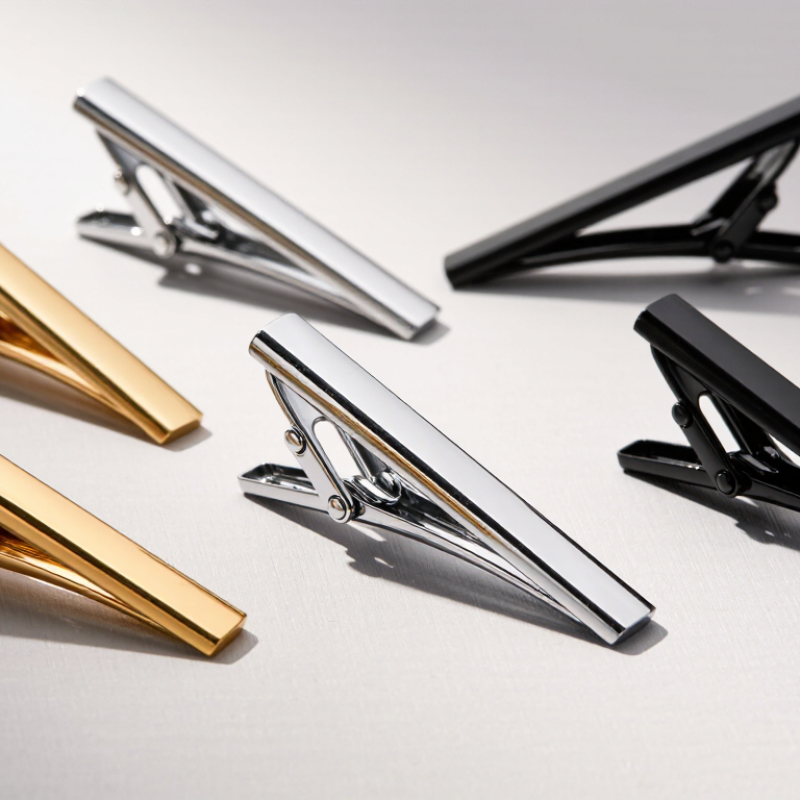
Define Product Specifications and Target Customer Needs
Before contacting a tie clip manufacturer, define what the clip must do and who will wear it. A slim office clip may need a low-profile shape, while a gift-oriented style can support a heavier finish or engraving. Write down the target width and length, metal type, surface finish, edge radius, and acceptable color variation. State how firmly it should hold different tie fabrics without leaving marks. Small details matter. A glossy sample may look polished under studio lights yet reveal scratches in daylight, so assess the finish under ordinary lighting.
Describe your intended retail price and order volume too; these can affect material, tooling, and packaging options. Ask the manufacturer to confirm dimensions, coating choices, logo placement, sample timing, and inspection points in writing. Request samples for more than one fabric thickness, not just a single smooth tie. Test real shirts. Check whether the clip opens smoothly, stays centered, and releases without snagging. It is tempting to specify every feature before seeing a prototype, but that can lock in assumptions. Leave room to review fit and finish, then revise the specification sheet before approving production. Keep requirements measurable, and note which preferences can change if cost or durability results differ. This makes supplier comparisons more useful than relying on attractive photos or vague assurances.
Assess the Manufacturer’s Experience and Production Capabilities
A tie clip may look simple, but consistent production takes careful control of small details. Ask how long the manufacturer has made metal accessories and which finishes it regularly handles. Experience matters most when it shows in practical answers: how the team prevents sharp edges, keeps clip tension consistent, and checks plating for visible marks. Request samples from different production runs, not just one polished prototype. A good sample helps, but it cannot tell the whole story.
Tip: Ask for a walkthrough of the production process, from material selection to final inspection. Find out which steps happen in-house and which are outsourced. This can reveal where delays or quality differences may occur. Ask how the factory responds when a batch has uneven color or a loose hinge. Specific answers are more useful than broad promises.
Compare the manufacturer’s stated capacity with your order size, design complexity, and delivery schedule. A large facility is not automatically the right fit; setup time and minimum quantities matter too. If possible, review a sample clip under ordinary lighting and test its grip on several fabric weights. Notice the spring action, edges, and finish. I would not rely on appearance alone. Some defects only show after repeated opening and closing, so ask what durability checks are actually performed and whether results are recorded.
Assess the Manufacturer’s Experience and Production Capabilities
Use this sample 1–5 scoring framework to compare a tie clip manufacturer’s documented experience and production readiness. The scores are illustrative, not industry averages; rate each manufacturer using verifiable evidence.
Check production history, equipment and process details, capacity records, quality-control documentation, and examples of customization before making a decision.
Compare Materials, Customization Options, and Sample Quality
7 Tips for Choosing a Tie Clip Manufacturer
Material choice affects weight, finish, and wear. Stainless steel suits a clean, corrosion-resistant look; brass feels warmer and heavier, while zinc alloy allows fine molded details. Compare the base metal and plating, not just the sample’s shine. Worldstainless reports that stainless steel contains about 60% recycled material on average and has an 85% end-of-life recycling rate. Those figures describe the material industry-wide, not a specific clip or supplier.
Ask manufacturers to quote the same dimensions, finish, and engraving across materials. Check whether they can control clip tension, edge smoothness, and plating thickness. Tiny lettering may look crisp in a digital mock-up, then blur on a narrow clip. Get the tolerances in writing. Ask how finishes are tested; ASTM B117 describes salt-spray testing, but the test duration and pass criteria must be agreed between buyer and supplier.
A physical sample reveals what a specification sheet misses. Check that the hinge opens smoothly, grips a folded shirt placket, and springs back without wobbling. Inspect the corners under bright light; thin plating often shows first along sharp edges. One sample is not enough. Request a production-equivalent sample, then compare it with the approved reference under natural and indoor lighting. I would still leave room for revision: a polished prototype can conceal small inconsistencies that appear in a batch.
Check Quality Controls, Certifications, and Compliance
When choosing a tie clip manufacturer, ask how quality is checked at each production stage. A reliable process should cover incoming metal, cutting, polishing, plating, assembly, and final inspection. Request a sample and examine its edges, finish, spring tension, and dimensions. Small flaws matter. A clip that scratches fabric or loosens after repeated use can undermine an otherwise attractive design.
Tips: Ask for written inspection criteria, recent test reports, and traceable batch records. Check that any certification is current, issued by a credible organization, and relevant to the factory or product—not merely displayed on a website. Ask how defects are recorded and corrected. The answer should include practical details, such as who rechecks a plated surface and how rejected pieces are separated. Paperwork helps, but it cannot replace inspecting the product.
Confirm that the manufacturer understands the requirements of your intended sales markets. These may cover material declarations, product labeling, or chemical limits, and requirements can vary by destination. Ask which documents support each claim and whether reports apply to the actual materials and production site. Be cautious of vague assurances. Even a thorough audit can miss a problem, so consider independent testing for higher-volume orders and keep approval samples for comparison. A neat certificate folder is reassuring, but I would not treat it as proof that every batch will match.
Review Pricing, Lead Times, Communication, and After-Sales Support
Choosing a tie clip manufacturer involves more than comparing unit prices. Ask what each quote includes: the metal base, plating, engraving, individual pouch, setup fees, and shipping. A low price may shift costs into tooling or packaging. Request a sample with the same finish and spring mechanism planned for production. Check that the clip closes evenly and has no sharp edges. Small details matter.
Lead times need equal scrutiny. Ask for separate dates for sample approval, production, inspection, and dispatch. “Four weeks” may not include transit or revisions. Confirm how holidays or material delays could affect the schedule, and whether partial shipments are possible. Build a buffer. Estimates are not promises, and a confident email does not guarantee an on-time delivery.
Communication becomes visible when something changes. Agree on one contact, update frequency, and written approval for artwork, dimensions, and finish. Ask for photos of a pre-production piece under neutral light. After-sales support matters too: clarify how defects are documented, response times, replacement terms, and return freight costs. Keep records of the agreed specifications and inspection criteria. A supplier may reply warmly yet vaguely; press for specifics, even if it feels awkward. Compare responsiveness during sampling, not just sales conversations, and note whether questions receive direct answers. Mistakes can still happen. What matters is whether the manufacturer acknowledges them and offers a practical fix.