Leave Your Message
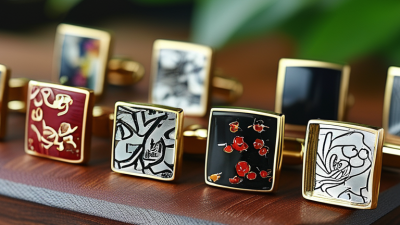
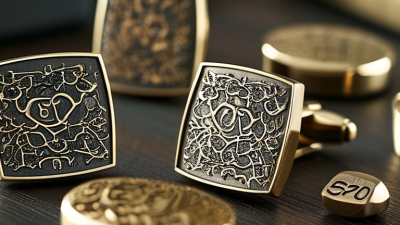
Finding a reliable Cufflinks Business Supply partner requires more than comparing prices. A supplier may display polished product photos, yet the real test appears in your hands. Check the hinge movement, engraving depth, plating consistency, packaging strength, and delivery records. Small defects become expensive when they reach retailers.
Industry reports support this cautious approach. Grand View Research’s fashion accessories market analysis highlights continued demand for premium accessories and product differentiation. McKinsey & Company’s State of Fashion reports repeatedly stress resilience, transparency, and faster supply-chain responses. These findings matter for cufflinks buyers because seasonal collections often depend on precise delivery. A delayed shipment can miss wedding seasons, corporate events, or holiday campaigns.
Martin Christopher, a widely recognized supply-chain expert, wrote, “Supply chains compete, not companies.” His observation fits cufflink sourcing closely. Your supplier’s inspection process, communication habits, and replenishment capacity can shape your brand’s reputation. Ask for material specifications, test samples, production photographs, and references from comparable buyers. Confirm whether quoted prices include engraving, gift boxes, export packaging, and quality checks.
Look beyond the cheapest offer. Too obvious? Perhaps. Yet many purchasing mistakes begin there. A reliable supplier should explain tolerances, plating standards, minimum order quantities, and corrective procedures clearly. Request a small trial order before signing a large agreement. Record every approval in writing. Independent testing may also be sensible for valuable materials or sensitive finishes.
The strongest Cufflinks Business Supply relationship is not perfect. It is measurable, honest, and responsive when something goes wrong. That is where genuine reliability becomes visible.

Before searching for a reliable cufflinks supplier, define the product precisely. Decide the base material, finish, dimensions, closure style, and packaging requirements. A polished sample may look excellent, but it can hide weak plating or loose hinges. I once approved a sample too quickly and missed a slight misalignment. That mistake made later quality checks more important.
Write measurable requirements for every detail. For example, specify the acceptable size tolerance, color consistency, engraving depth, and packaging strength. Set a realistic minimum order quantity and delivery schedule. Ask suppliers for material information, production photos, inspection procedures, and recent sample results. Reliable suppliers should answer clearly, not vaguely. Their experience should be visible in their process.
Tips: Request two or three samples from different production batches. Test the hinge repeatedly and inspect the surface under bright light. Compare the delivered sample with your written specifications. Keep photos and inspection records for every order. Do not judge a supplier only by a low quotation. Pricing can change when quality expectations are clarified. Also, leave room for improvement in your requirements; some details may seem useful but add cost without improving the customer’s experience.
| Requirement Area | Recommended Product or Supplier Requirement | Practical Benchmark or Acceptance Criteria | Verification Method | Priority |
|---|---|---|---|---|
| Cufflink Type | Specify the mechanism before requesting quotations, such as bullet-back, whale-back, chain-link, fixed-back, or stud-style cufflinks. | One approved mechanism per product code | Review technical drawings, reference samples, and product photographs from multiple angles. | High |
| Base Material | Define the exact base metal, for example stainless steel, brass, sterling silver, or another documented alloy. | Material composition documented for every component | Request material declarations and, where necessary, independent laboratory testing. | High |
| Plating and Surface Finish | State the required finish, such as polished, brushed, antique, gold-tone, silver-tone, or rhodium-style plating. | Consistent color, adhesion, and surface appearance across the approved sample | Inspect a pre-production sample and conduct abrasion, adhesion, and visual consistency checks. | High |
| Dimensions and Weight | Provide the face diameter or length, thickness, post dimensions, and target weight for each design. | Dimensional tolerance agreed in writing, commonly within approximately ±0.2 mm for small metal components | Use calibrated digital calipers and a precision scale to compare production samples with the approved specification. | High |
| Logo or Customization | Define engraving, embossing, enamel, laser marking, stone setting, or other personalization requirements. | Artwork supplied as a vector file with placement, size, and color references | Approve a digital proof and physical pre-production sample before bulk manufacturing. | Medium |
| Skin-Contact Safety | Require controls for restricted substances and materials that directly contact the wearer’s skin. | Applicable chemical and product-safety requirements identified for the destination market | Request current third-party test reports for nickel release, lead, cadmium, and other substances when relevant. | High |
| Quality-Control Process | Choose a supplier with documented incoming-material, in-process, and final-inspection procedures. | Written inspection checklist covering appearance, function, dimensions, plating, and packaging | Ask for sample inspection records and arrange an independent pre-shipment inspection for larger orders. | High |
| Functional Durability | Ensure the closure operates smoothly and remains secure during repeated opening and closing. | No loose mechanism, sharp edge, visible cracking, or plating flaking during agreed testing | Perform repeated-operation testing and inspect hinges, posts, backs, chains, and soldered or joined areas. | High |
| Minimum Order Quantity | Confirm minimum quantities separately for standard designs, new molds, customized finishes, and packaging. | MOQ stated per design, color, finish, and packaging configuration | Obtain a written quotation showing unit price, sample charge, tooling charge, and MOQ assumptions. | High |
| Sampling and Approval | Require a representative sample before approving mass production. | Sample approval includes dimensions, materials, finish, mechanism, logo, and packaging | Sign or digitally record an approved reference sample and attach the final specification sheet. | High |
| Production Lead Time | Separate development time, sample time, production time, and packaging time in the schedule. | Lead time measured from final artwork, deposit, and sample approval | Request a milestone schedule and confirm how delays, material shortages, and rework are handled. | Medium |
| Packaging Protection | Specify individual boxes, pouches, inserts, anti-tarnish protection, labels, and shipping cartons. | Packaging prevents scratching, movement, moisture exposure, and deformation during transport | Conduct a packaging drop and transit simulation appropriate to the order and shipping method. | Medium |
| Traceability | Require batch identification for materials, production dates, inspections, and shipment quantities. | Each production lot can be linked to its purchase order and inspection records | Review batch labels, production records, packing lists, and retained reference samples. | Medium |
| Commercial Terms | Clarify payment terms, currency, quotation validity, tooling ownership, replacement policy, and shipping responsibilities. | All cost elements and responsibilities documented before purchase-order confirmation | Compare at least three written quotations using the same specification and delivery terms. | High |
| Supplier Communication | Select a supplier that responds accurately and provides clear technical answers rather than only low prices. | Consistent answers, complete documents, and prompt resolution of specification questions | Use a structured questionnaire and evaluate response completeness, clarity, and follow-up reliability. | High |
| Order-Release Decision | Approve the supplier only after product, quality, commercial, and delivery requirements are documented. | No unresolved critical issue involving safety, dimensions, mechanism, finish, or delivery | Complete a weighted supplier scorecard and retain the approved specification with the purchase order. | High |